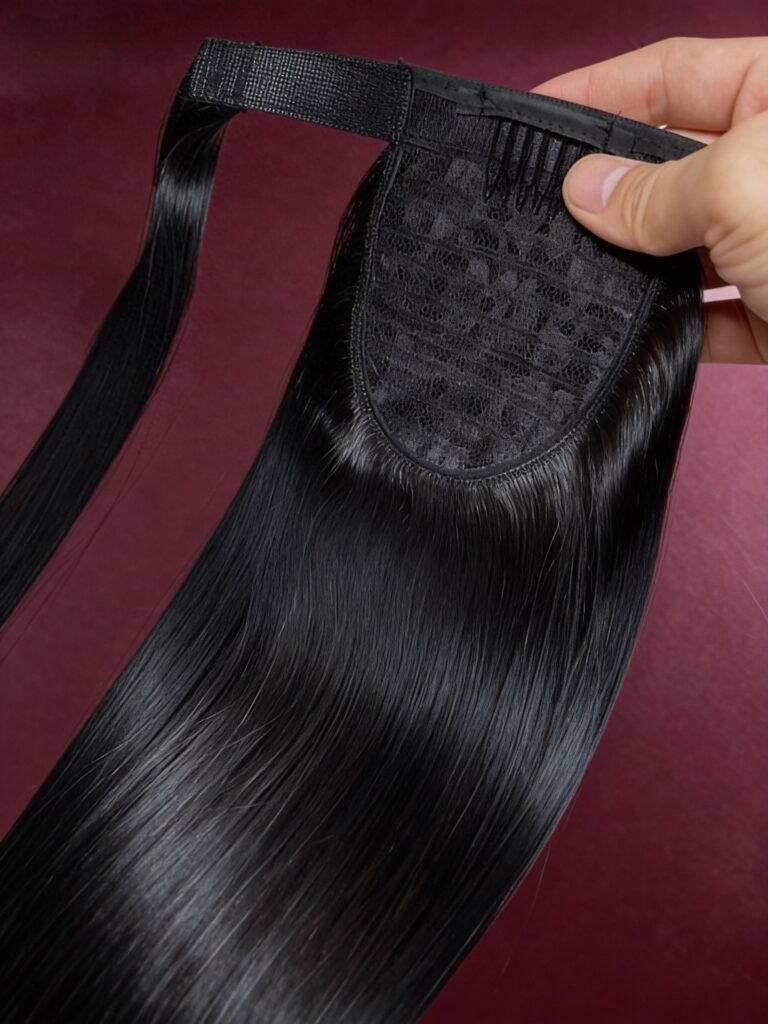
Wig Care
Washing and Caring for a Human Hair Wig: Less Often Than You Think
In short: A human hair wig is washed less often than your own hair, about every fifteen to twenty wears: brush it dry beforehand, use lukewarm water, wash in one direction from top to bottom without kneading, apply care products from ear level down and never to the base, air dry, and use heat only with protection at 160 to 180 degrees. At EchtHaar Direkt, wigs, toppers and ponytails are made from 100 % human hair, so they tolerate care just like your own hair.
The most common mistake with a human hair wig isn’t the wrong shampoo. It’s washing it too often. This guide tells you when, how often and with what to wash it — and what a wig can’t tolerate at all.
A human hair wig is made of real hair — but it doesn’t sit on a scalp. That’s exactly why almost everything about its care differs from your own hair. Once you’ve understood that, you’ll hardly get anything wrong.

Watch the video with chapters.
Why a Wig Is Washed Less Often
Your own hair gets greasy because your scalp produces oil. A wig, a topper and a ponytail get none of that. They don’t get greasy, they just get dusty and pick up odors.
That’s why the rule is: wash about every fifteen to twenty wears — not weekly. Washing more often makes the hair dull, because once the natural oils are washed out, they don’t come back on their own. There’s no scalp to supply more.
Exceptions where you’d wash more often: heavy sweating, smoke, cooking odors, perfume at the roots. In those cases, go by your nose rather than the calendar.
The Guide, Step by Step
1. Brush through while dry
Always before the water, never afterwards when it’s wet. Work from the ends upward, strand by strand. Tangles that stay in when dry turn into felt when wet.
2. Lukewarm, not hot
Hot water opens the cuticle more than necessary and draws out color. Lukewarm is perfectly sufficient. Don’t dunk the wig into the basin and push it around — let the water run from top to bottom.
3. Wash in one direction, don’t knead
This is the most important move. Stroke the shampoo through from top to bottom, always in the same direction. Kneading, swirling and bunching the hair up tangles the strands together — and unlike with your own hair, nothing grows back here.
4. Apply care from ear level downward
Keep the root areas and the base free — that’s where the knots or wefts sit, and care products soften them over time. Our 2-Phase Treatment is sprayed onto damp hair after washing and not rinsed out. Shake well before use so both phases mix.
5. Squeeze out, don’t rub
Gently squeeze the water out, then lay the wig in a towel and press down. Rubbing is the second most common cause of dull wig hair — right after washing too often.
6. Dry flat or on a stand
Air dry, not on a radiator and not in the sun. A wig stand keeps the shape; lying flat on a towel works just as well. Only brush again once everything is dry.
Storing It Between Wears
Not crumpled up in a drawer. A wig keeps its shape best on a stand or head; a topper and a ponytail lie flat and stretched out. Store in a dark, dry place — direct sunlight bleaches human hair, slowly but irreversibly.
Styling: Heat, Color, Curls
Human hair can be straightened and curled just like your own hair — but always with heat protection and preferably at 160 to 180 degrees rather than at maximum. Here too: nothing grows back. Once it’s burned, it stays burned.
Coloring is possible because it’s real hair — going darker works more reliably than going lighter. That belongs in the hands of a hairdresser, not in your home sink. If you want the shade to be right from the start, order in a custom color, and re-coloring becomes unnecessary altogether.
What a Wig Can’t Tolerate
- Washing too often — the classic. Every fifteen to twenty wears is enough.
- Brushing when wet — human hair is most fragile when wet.
- Rubbing and kneading — permanently tangles the hair together.
- Radiators, hairdryer on full power, direct sun — dries out and bleaches.
- Chlorine and salt water — both damage human hair. Soak it thoroughly with clear water beforehand and wash it immediately afterwards. Best of all: leave the wig at the poolside.
- Care products on the base — they soften knots and wefts, and then the wig loses hair.
Topper and Ponytail: What’s Different
A topper sits on the crown and is attached to your own hair — so it gets closer to your head than a full wig and picks up a bit more from it. Wash it toward the upper end of the recommendation, but still not weekly.
A ponytail is the least demanding of all: it touches almost nothing except your own length. Brushing is usually enough. To compare which piece is meant for which concern, see Hair Topper, Wig or Ponytail.
Frequently Asked Questions
How do I brush a human hair wig properly?
Always dry, never wet. Start at the ends and work your way up strand by strand, never pulling through from the root. Usually it’s enough to brush the wig out in the evening after taking it off and then place it on the stand or lay it flat so it keeps its shape. It’s washed about every 15 to 20 wears.
Can I use regular shampoo?
A mild shampoo without harsh surfactants is fine. Avoid anything that cleans very strongly or brings silicones into the root area. The real question isn’t the shampoo anyway, but how often you use it.
How long does a human hair wig last?
That depends almost entirely on how it’s cared for and how often it’s worn. If you wash rarely, brush dry and use heat sparingly, you’ll get noticeably more life out of it than someone who washes weekly and straightens with high heat.
Can I sleep in my wig?
Better not. The friction against the pillow overnight is considerable, and it’s exactly the kind of strain that leaves human hair looking dull. Take it off in the evening, brush it out, and put it away.
And what if it has already become dull?
A treatment mask brings a good deal back, because it replaces what the scalp can’t supply. Don’t expect miracles, though: mechanically damaged hair — matted or burnt — can’t be repaired, only disguised.
In short
Wash less often than you think. Brush dry, never wet. Brush in one direction from top to bottom, without kneading. Apply care products from ear level down, not on the base. Air-dry. Use heat with protection and at 160 to 180 degrees. If you stick to these six points, you’ve already got almost everything else right.