7 Pro Care Tips
How to Care for Human Hair Extensions Properly: The 7 Rules
In short: wash with sulfate-free shampoo and lukewarm water, two to three times a week; apply care products only to the lengths and ends, never to the bonds; no oil and no silicone at the roots; squeeze out water instead of rubbing and blow-dry the roots dry; only style with heat protection; braid your hair at night and sleep on silk; avoid chlorine, salt and long sun exposure. For check-ups: Bondings every 8 to 12 weeks (moving up), tapes every 4 to 8 weeks, wefts every 6 to 8 weeks. At EchtHaar Direkt, the hair has no silicone coating, which is why the right care takes effect right away.
Order directly
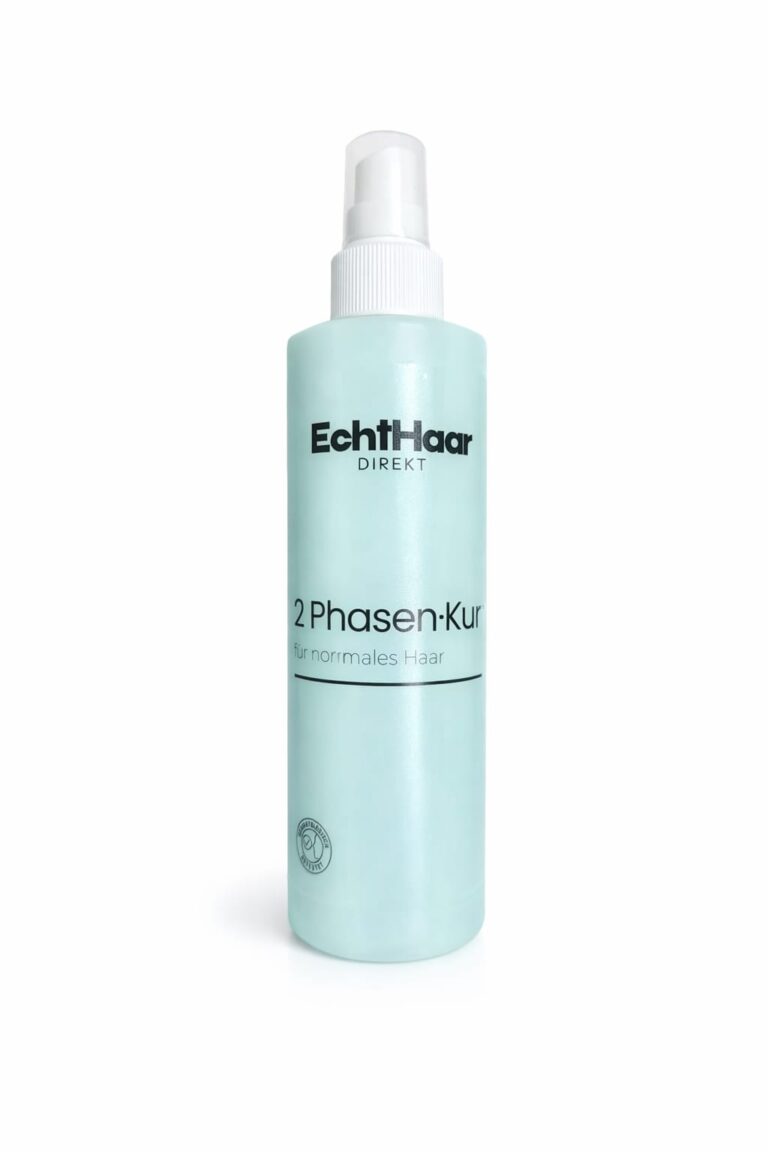
- 2-phase treatment for extensions · Care for human hair extensions · 37,50 €
Also available to pay on invoice or in installments with Klarna
Sulfates, oil at the roots, sleeping with wet hair: these three habits cost you more than any product can give back. Here are the seven rules that apply equally to Bondings, tapes, wefts and clip-ins — and the no-gos you need to know about. How long extensions last in the first place is covered in How Long Do Extensions Last?
If you follow these seven tips, you get the maximum wear time out of your extensions. If you don’t, you’ll be annoyed after 6 weeks by damaged strands. It really is the difference between an investment and throwing money away.

Watch the video with chapters.
How do you care for extensions properly?
You care for human hair extensions with gentle washing, little heat and protection for the bonds. These seven rules are all you need for everyday life:
- Wash with sulfate-free shampoo and lukewarm water, two to three times a week.
- Apply care products only to the lengths and ends, never to the bonds.
- No oil and no silicone at the roots.
- Squeeze out water instead of rubbing, and blow-dry the roots dry.
- Only style with heat protection, not above 180 °C.
- Braid your hair at night and sleep on silk.
- Avoid chlorine, salt and long sunbathing.
Extensions shampoo instead of regular shampoo
Regular shampoos contain sulfates. Sulfates loosen the keratin bonds of Bondings, soften tape adhesive and strip moisture from human hair. The result: strands fall out and shine disappears. You need a sulfate-free shampoo plus a 2-Phase Treatment for weekly deep care.
Washing technique: gentle at the roots
Don’t scrub at the roots on top; the bonding points don’t like that. Gently massage the lengths (from the middle downwards). Use lukewarm water, not hot (max. 37 °C). No circular motions directly over the bonds. Always work in a vertical direction, from top to bottom, with the direction of hair growth.
Brush several times a day, but the right way
Use a special extensions brush with soft bristles (plastic claw clips are a no-go). Brush from the bottom up: start with the ends, then work your way higher. At least 2× a day, in the morning and in the evening. When you go to bed, put your hair in a loose ponytail or braid; this prevents tangling.
Heat only with protection
Heat protection spray before every flat iron or curling iron, not up for debate. Skip the bonding points when straightening, as direct heat contact loosens keratin. Maximum temperature 180 °C; anything above that permanently damages human hair. Hair dryer: medium setting, held 15 to 20 cm away. Never aim it directly at wet tape bonds.
Weekly deep care
2-Phase Treatment 1× per week; it supplies the human hair with moisture and seals the cuticle layer. Argan oil in the lengths, used sparingly (1 drop is enough). Never put conditioner on the bonds, as it softens Bondings and tape. Dilute care products with water before applying.
Swimming, sports, sauna: properly prepared
Chlorinated and salt water attack human hair. Before swimming: soak your hair completely with fresh water, so the human hair soaks up water and less chlorinated water gets in. Wear a ponytail or bun while swimming to prevent tangling. After sports or swimming, rinse out quickly and never let salt or chlorine dry in. Sauna: ponytail, max. 1× per week, shower immediately afterwards.
Sleeping gently and without friction
Never sleep with wet extensions; they tangle and break. Wear a ponytail or braided style overnight. A silk pillowcase prevents friction and tangling much better than cotton. Alternative: a satin sleep cap. Find more on sleeping, sports and updos in the guide Everyday Life with Extensions.
Care isn’t rocket science. But it isn’t optional if you want your extensions to be worth their money.
When should you see your hairdresser for a check-up?
Bondings
Check-up appointment every 8 weeks. Strands that have slipped are readjusted.
Tape
Re-tape every 4 to 8 weeks, meaning new adhesive strips.
Wefts
Tension check every 6 to 8 weeks and, if necessary, sewing them in again.
No-gos: what you must never do
- Home-remedy oils applied directly to bondings. They soften the bond.
- Hot water directly on the bonds. No hot rinsing at the roots.
- A very fine-toothed comb in the lengths. It tears the hair out. Use a wide-tooth comb or an extensions brush.
- Elastic bands with a metal clip. They kink the strands and make them break.
- Hairdryer nozzle directly on the bondings. A diffuser with heat contact loosens the keratin.
- Sleeping with loose, wet hair. Guaranteed matting the next morning.
Care essentials you need
Sulfate-free shampoo
The must-have product number one. Sulfates are the biggest enemy of bondings and tapes.
2-Phase Treatment
Weekly deep care. Nourishes the real hair and seals the cuticle.
Extensions brush
Soft bristles, no plastic claws. Prevents tugging at the bonds.
Silk or satin pillowcase
Friction-free while you sleep. This change alone noticeably extends how long you can wear them.
Frequently asked questions
How often should I wash my extensions?
2 to 3× per week, no more. Washing every day strips too much moisture and puts unnecessary strain on the bonds.
Can I go swimming with extensions?
Yes, but only with the precautions from tip 6. Soak your hair in fresh water beforehand, wear a ponytail and rinse it out immediately after swimming.
What should I do about severe matting?
Don’t pull, that makes it worse. Tease it apart with your fingers, then work through slowly with a wide-tooth comb, using a little conditioning spray if needed. For extreme matting: see a hairdresser.
Can I keep using my own hair care products?
Only if they are sulfate- and silicone-free. Read through the ingredients carefully once. If in doubt: products designed specifically for extensions are the safe choice.
Does dry shampoo help with extensions?
Yes, go ahead. Dry shampoo even protects the bonds, because you wash with water less often. But don’t spray it directly onto the bondings, only into the lengths and at the roots.
How do I blow-dry extensions correctly?
Always start with the roots and along the bonds until they are dry; wet bondings, tapes and wefts are the most common cause of matting. Medium temperature, keep your distance, do the lengths last and in the direction of hair growth. Never sleep with wet hair.
How do I make extensions soft again?
Treat the lengths with a treatment or an oil, only in the lengths, never on the bond, leave on for ten minutes, rinse with lukewarm water. Use sulfate-free shampoo. Our 2-Phase Treatment is made for this. Hair that has turned dull becomes supple again with care, but not like new again; the second durability figure stays at 1 to 2 years with good care.
Which care products for real hair extensions?
Sulfate-free shampoo, a silicone-free treatment for the lengths, an oil for the ends, an extensions brush with soft bristles and heat protection before using a flat iron or curling iron. None of it on the bond, otherwise keratin and adhesive will loosen.
How do I care for Tape Extensions?
Like all extensions, plus one rule: oil dissolves adhesive. Don’t wash for the first 48 to 72 hours after application, keep oil, conditioner and dry shampoo away from the tape, and always blow-dry the roots. The adhesive bond lasts 4 to 8 weeks, the hair 1 to 2 years with good care. Everything about tapes in the Tape Extensions Guide.
Conclusion
Extensions care isn’t rocket science, but it isn’t optional. Seven rules, one 2-Phase Treatment per week, a silk pillowcase and you get the maximum wear time out of your extensions. If you don’t do it, you’ll be annoyed after six weeks by damaged strands.
Why do freshly dyed extensions lose a little color at the beginning?
Our real hair is freshly dyed for you. Freshly dyed hair releases some color at first, which fades over time and with the first washes. We deliberately use no silicone coating, which would lock in the color artificially but weigh the hair down and make it dull. And because it is real hair, it can be toned darker and refreshed with a treatment; it cannot be lightened, as that makes real hair without a root turn straw-like. How toning is done safely is explained in the guide Dyeing and toning extensions.
What helps if the extensions tangle quickly?
Quick tangling can be caused by static electricity (dry heating air, friction against clothing) or by certain care products. Our recommendation is our 2-Phase Treatment, which makes hair noticeably soft and easy to comb again.
Care and reorders
- 2-phase treatment for extensions · Care for human hair extensions · 37,50 €
- Keratin Bondings · new custom-made set · from €184.33 for 40 cm, 100 g
- Tape Extensions · new custom-made set · from €191.00 for 40 cm, 100 g
The configurator shows the price for your length and quantity instantly. You can also pay with Klarna (invoice, installments or instant bank transfer); which options you see is decided by Klarna. Buy extensions with Klarna
Unsure about method, quantity or color? Message Nora on WhatsApp, send her a photo of your hair in daylight.